Epoxy Garage, Basement and Commercial Floors in Bartlett, IL

Ground, moisture-tested and coated to a written spec by a crew with more than 20 years on concrete slabs.

Bartlett Epoxy Flooring has spent more than 20 years grinding, testing and coating concrete in Bartlett, IL, from epoxy garage floors and basement floor epoxy to polished concrete, polyaspartic coatings, metallic and flake finishes, and commercial, industrial and kitchen floors. Every job starts the same way: the slab is opened with a diamond grinder or shot blaster, tested for moisture and mapped for cracks before anyone quotes a coating.

That order matters because most failed floors fail from underneath. A garage slab that was never ground, a basement that wicks water vapor, or an old coating rolled over instead of removed will lift no matter how good the product in the bucket is. We price the preparation in writing, so the proposal you sign names the product line, the number of coats and the finished thickness.

Homeowners call us about two- and three-car garages and finished basements; owners and property managers call about warehouse bays, repair shops, food plants and restaurant kitchens. The sections below walk through how each kind of floor is built, what moves the price, and where a coating is the wrong answer.

Get Your Free Quote

Fast response • No obligation

So we can reach you about your request.

So we can send you a confirmation after you submit this inquiry form.

  • 20+ Years on Concrete
  • Moisture Tested First
  • Written Scope and Pricing

What we do

Our Services

Epoxy and Polished Concrete Floors in Bartlett, IL

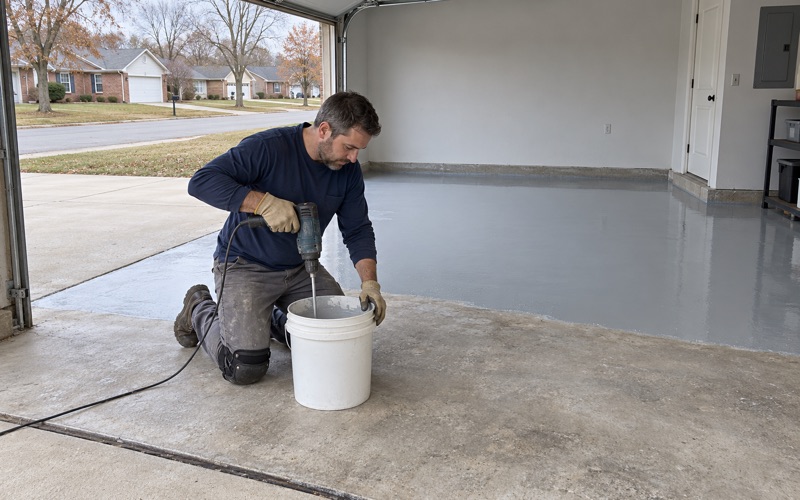
Gray epoxy being mixed in a pail on a ground Bartlett garage slab, the first coat already spread across the back of the floor.

Epoxy Garage Floor

Ground, moisture-tested epoxy garage floors with flake and polyaspartic topcoats chosen to handle road salt and warm tires.

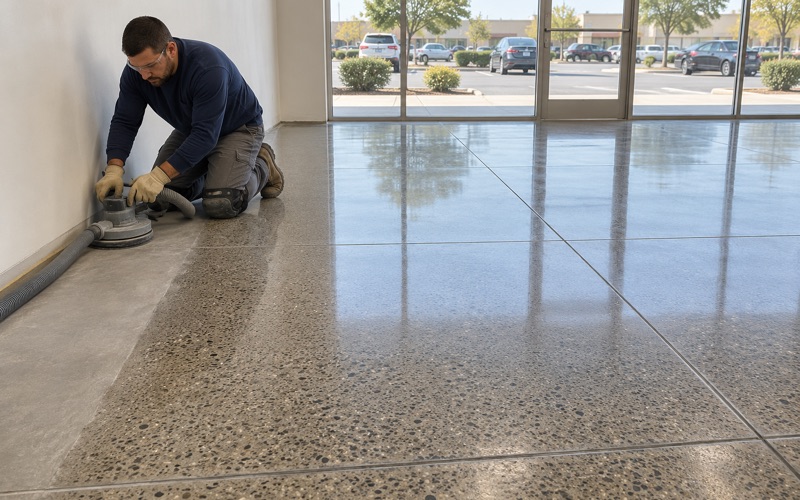
The strip along a wall being edge-polished to match a newly polished retail floor in a Bartlett strip center store.

Polished Concrete Floors

Concrete ground, densified and polished to the sheen you choose, for showrooms, warehouses, basements and garages.

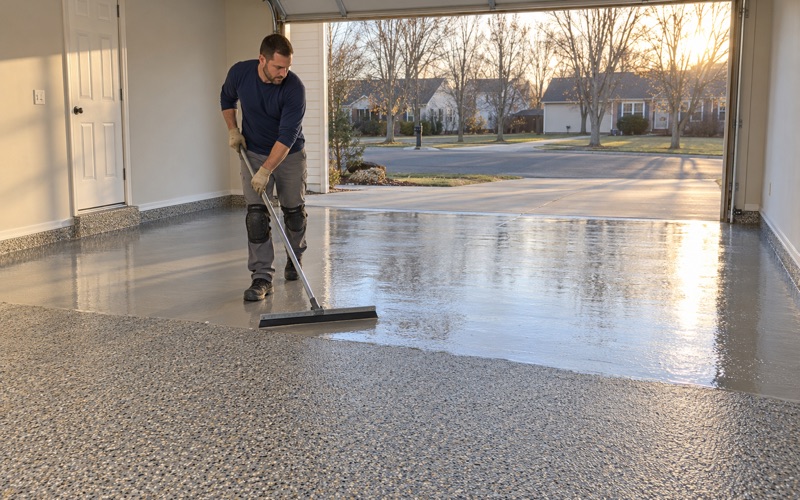
A clear polyaspartic topcoat being pulled across a flake floor in a Bartlett garage on a cold late-fall afternoon.

Polyaspartic Floor Coating

Fast-curing polyaspartic coatings that stay clear in sunlight and stand up to salt, fuel and hot tires on garage and shop floors.

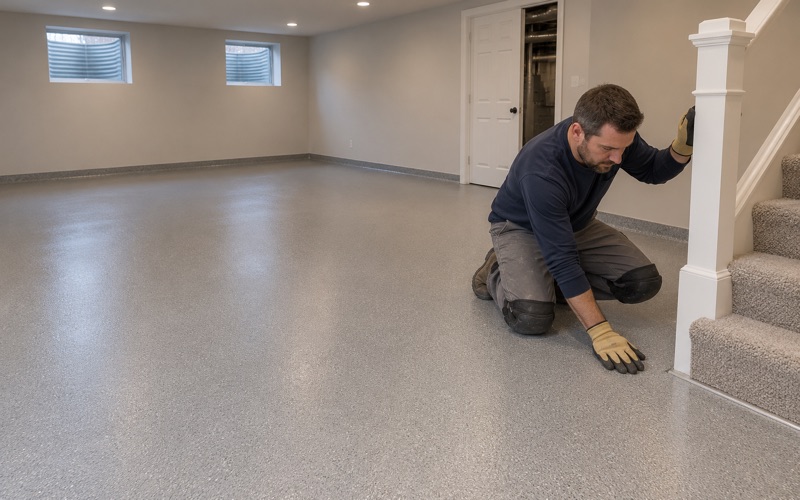
A finished warm gray quartz epoxy floor in a Bartlett basement family room, ending in a neat transition at the foot of the stairs.

Basement Floor Epoxy

Basement floor epoxy installed only after the slab is tested for moisture and checked for past water, drains and sump pits.

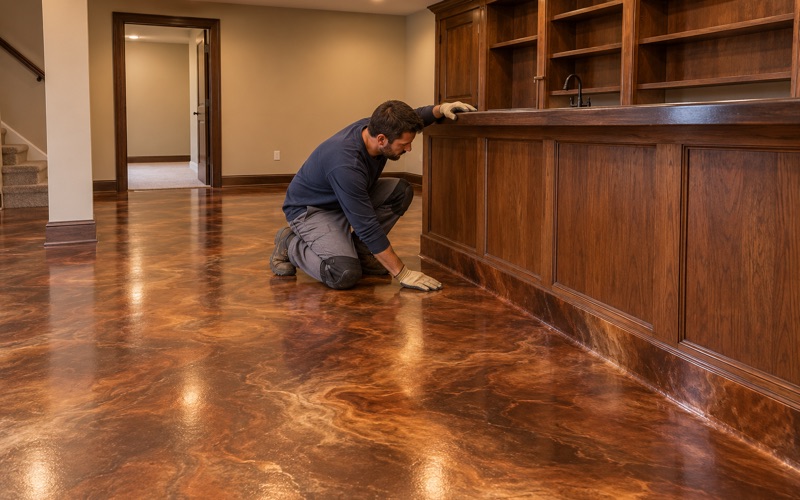
A copper and bronze metallic epoxy floor finished around a home bar in a Bartlett basement.

Metallic Epoxy Floor

Hand-worked metallic epoxy floors with marble, lava and cloud patterns, installed over a flat, ground and moisture-tested slab.

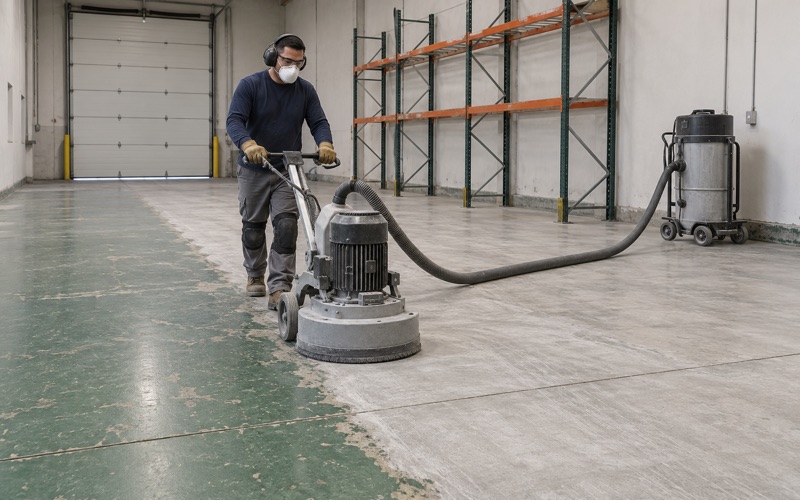
A walk-behind diamond grinder taking an old coating off a flex warehouse floor in a Bartlett business park.

Concrete Grinding

Diamond grinding and shot blasting that strip old coatings and glue and leave slabs with the right profile for a new floor.

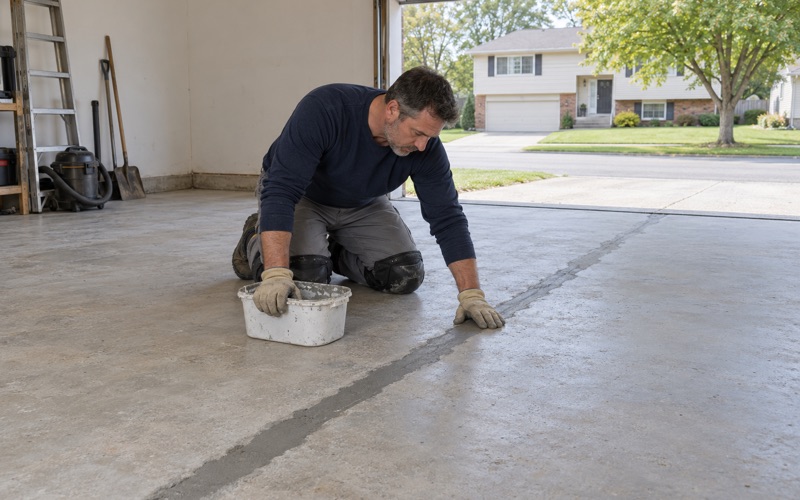
A crack across a Bartlett garage slab chased out, filled flush with gray repair mortar and ground level before coating.

Concrete Floor Repair

Crack, spall, scaling and edge repairs that make a slab sound before coating, with a frank answer when replacement is the fix.

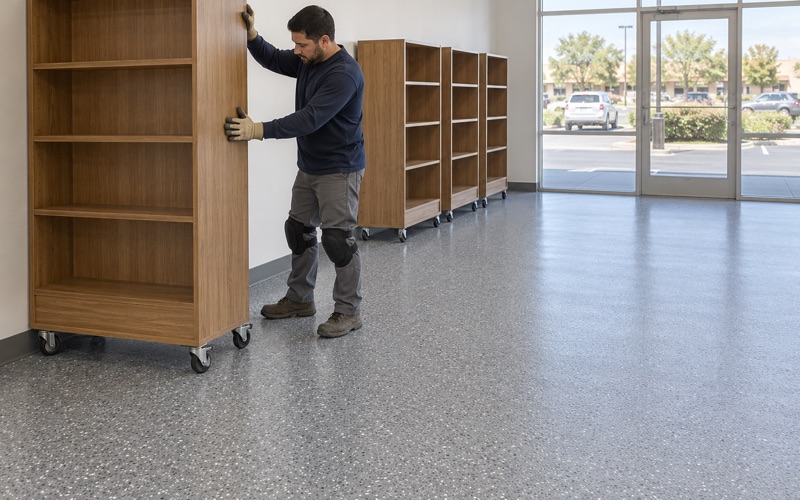
A rolling display fixture eased back onto a new seamless gray epoxy floor in a Bartlett strip center shop.

Commercial Epoxy Flooring

Epoxy floors for stores, offices, clinics and shops, specified for traffic and cleaning and phased around operating hours.

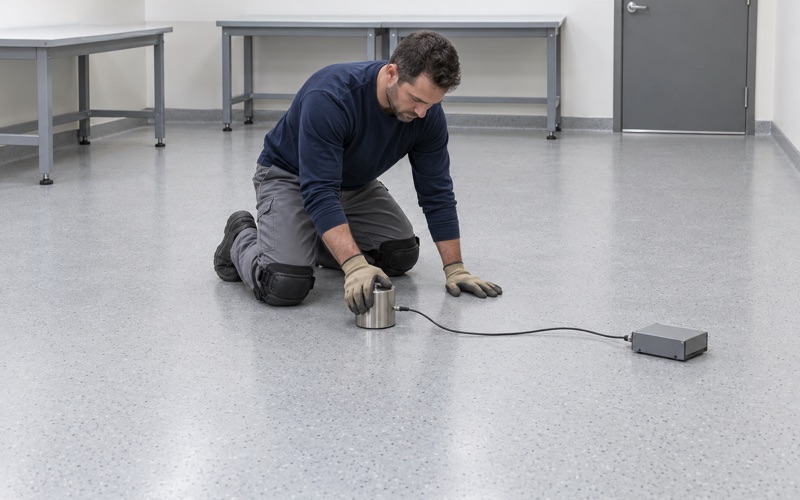
A static-dissipative epoxy floor being tested with a weighted electrode in a Bartlett electronics assembly room.

ESD Flooring

Static-dissipative and conductive ESD floors with copper grounding and resistance testing for electronics, labs and server rooms.

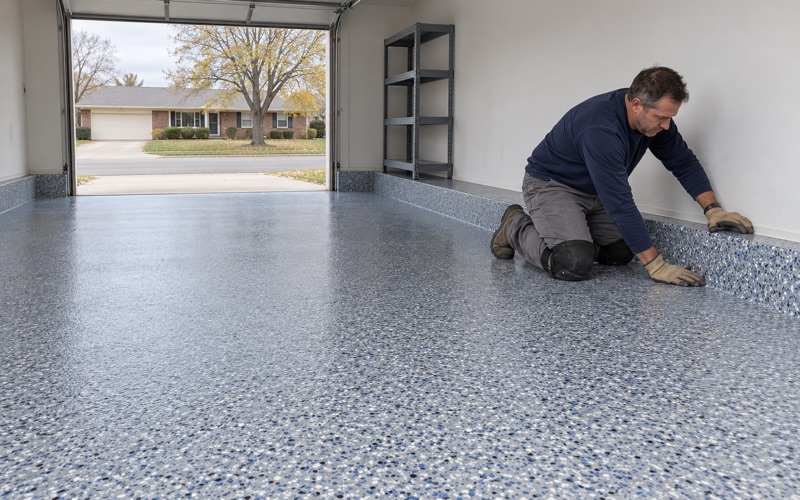
A blue-gray flake floor carried up the concrete curb along the side wall of a Bartlett garage, finished under a clear topcoat.

Flake Epoxy Floor

Vinyl flake epoxy floors with chip size, color blend and broadcast density chosen for garages, basements and shops.

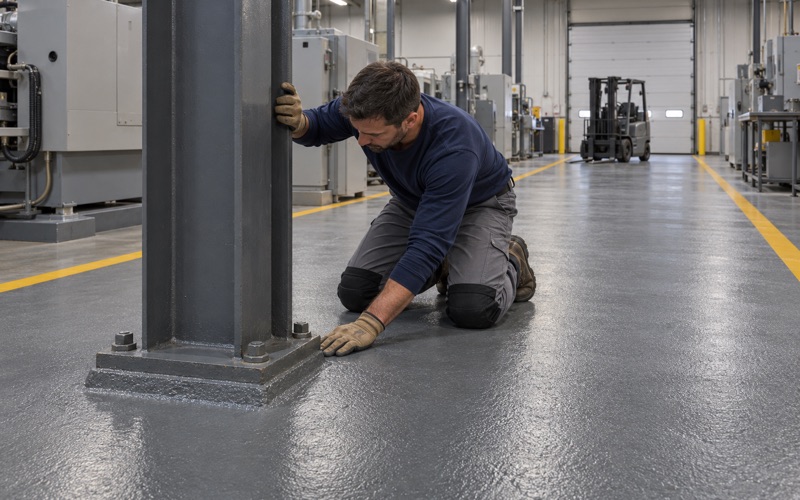
Trowel-applied epoxy mortar meeting a steel column base on a manufacturing floor in a Bartlett business park, a forklift parked far down the aisle.

Industrial Epoxy Flooring

Heavy-duty epoxy, mortar and urethane cement floors for warehouses and plants, specified by load and chemical exposure.

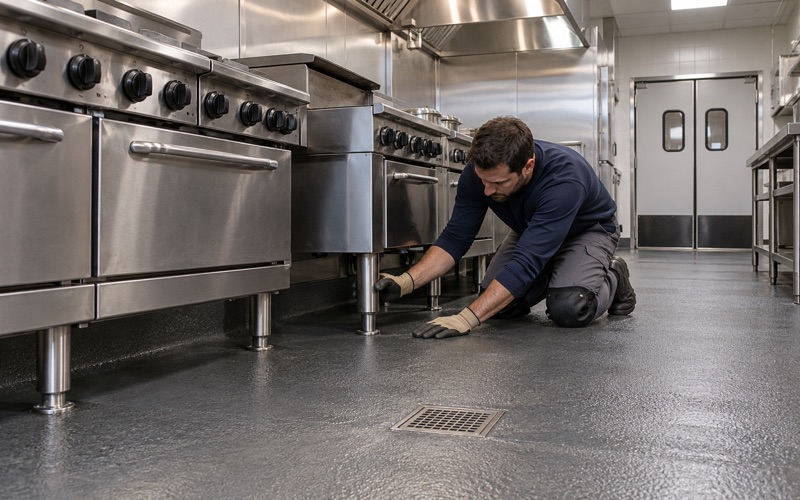
A urethane cement floor under a restaurant cook line in Bartlett, coved up the wall behind the ranges and sloping to a floor drain.

Commercial Kitchen Flooring

Urethane cement kitchen floors with integral coved bases, built for hot water, grease, acids and daily washdown.

Experience Behind Every Floor

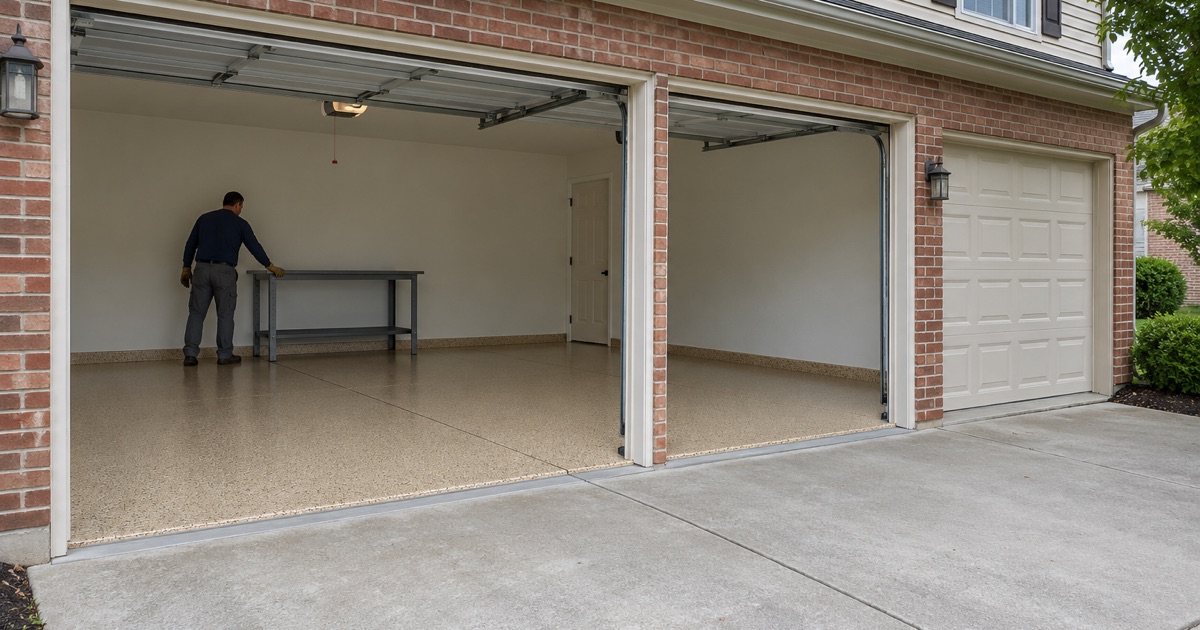
A finished tan, brown and cream flake floor in the three-car garage of a 1990s Bartlett two-story, a steel workbench set back against the rear wall.

20+ Years on Garage, Basement and Commercial Slabs

We have been preparing and coating concrete for more than 20 years, long enough to see what happens to an acid-etched garage floor after its third winter of road salt. That experience shows up in the scope rather than in a slogan: the moisture test, the crack map and the surface profile are written into the proposal before the price is final.

Why Choose Bartlett Epoxy Flooring

Ground, Never Acid-Etched

Every slab we coat is opened with a diamond grinder or shot blaster to a measured ICRI concrete surface profile, so the epoxy locks into sound concrete rather than sitting on the weak, etched skin a muriatic acid wash leaves. The grinder runs into a vacuum at the machine, so the dust is never rinsed toward a floor drain, a sump or a storm inlet.

Moisture Tested Before Pricing

No basement or garage slab is priced until it has been tested with a plastic sheet test, calcium chloride kits or in-situ relative humidity probes, because a vapor-loaded slab pushes a coating off from below. A floor that tests high gets a moisture-mitigation primer or an honest no, rather than a warranty that quietly excludes the problem.

Built for Salt Winters

Garage systems here are specified for the brine and rock salt that ride in on tires all winter, so the floor carries a full-build base and a chemical-resistant polyaspartic topcoat rather than a thin roll-on kit that dulls, stains and lifts by its second spring.

Village Rules Checked First

Bartlett requires a village contractor’s license backed by a permit bond and liability insurance, and its codified rules set garage slab thickness, so we confirm with the Building Division whether a job is a coating or a slab replacement before it is scheduled, rather than learning the answer at an inspection.

Cure Timed to the Slab

Cure schedules follow slab temperature and the dew point spread at the slab surface, not the calendar, so a January job in an unheated Bartlett garage is told to wait for spring rather than being coated cold and left with amine blush, a soft film and poor adhesion.

Warranty Limits Up Front

Before a job is sold we explain what a coating warranty leaves out, naming moisture vapor transmission and hydrostatic pressure first, so a basement owner knows where the risk sits rather than finding it in the fine print after a wet spring.

The Garage Floor, Start to Finish

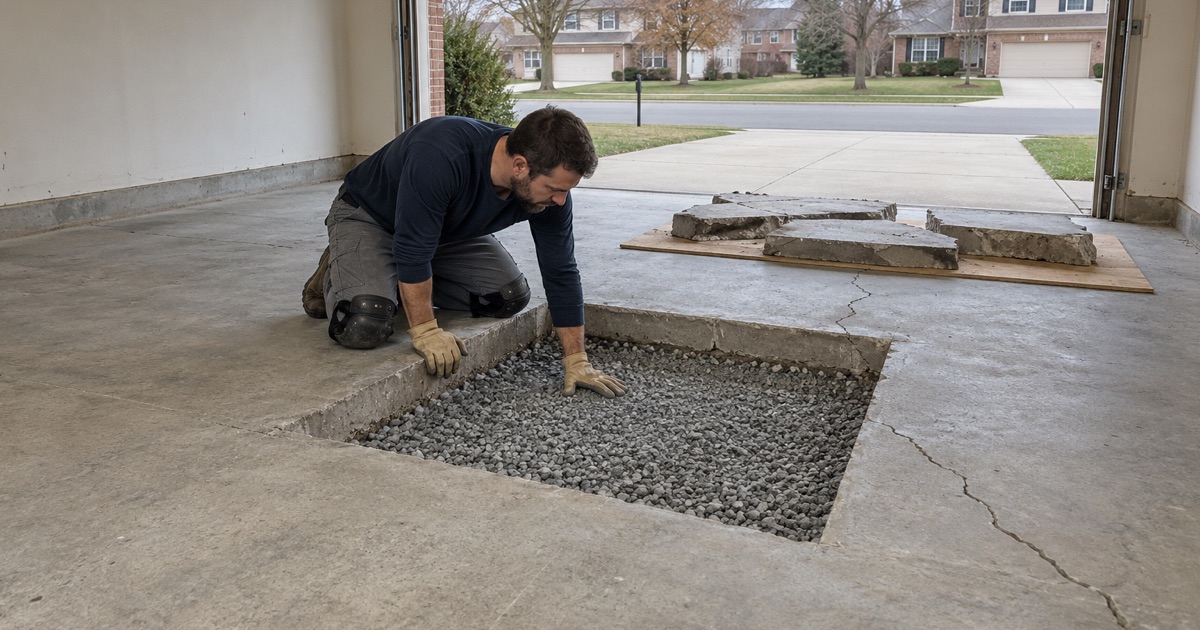
A cracked section sawn out of a Bartlett garage slab, its thickness and the compacted stone base beneath laid bare before the coat-or-replace call.

How an Epoxy Garage Floor Job Runs

An epoxy garage floor starts with a walkthrough: we check for old sealers, cracks, oil and moisture, then write the scope. On install day the slab is ground and vacuumed, cracks and spalls are filled, the base coat and any flake go down, and a topcoat seals it. Foot traffic and parking follow the cure times printed for the product, which you get in writing.

Attached Garages: Keeping Dust and Odor Out

In an attached garage, the door into the house matters as much as the floor. We seal that door, run every grinder into a dust-collecting vacuum, and choose low-odor, low-solvent products where the garage shares air with living space, so the work stays in the garage.

Garage Slabs Poured Without a Vapor Retarder

The residential code allows a garage slab to be poured without a vapor retarder underneath (IRC R506.2.3), so many garage floors sit directly on stone and soil. Ground moisture can rise into that concrete, which is why a garage gets the same moisture test as a basement before we commit to a coating system.

Bartlett’s Garage Slab Rules: 5 Inches on Compacted Stone

The village’s codified rules call for a 5-inch garage slab on a 4-inch compacted stone base, with a pre-pour inspection before concrete is placed. Bartlett replaced its Title 9 building code by ordinance in June 2026, so whenever a job involves new concrete rather than a coating, we confirm the edition in force with the Building Division.

Moisture Testing a Garage Slab

We screen with an ASTM D4263 plastic sheet test, then use ASTM F1869 calcium chloride kits or ASTM F2170 in-situ relative humidity probes when the reading decides the system. The results go into the proposal, so the coating we recommend can be checked against the slab it is going on.

Coating a Slab Versus Replacing It

A slab with hairline cracks and light spalling can usually be repaired and coated. One that has heaved, settled badly or crumbles at the surface needs replacement first, and replacement means new concrete with its own permits and inspections, so we say which one your floor needs before quoting a coating over it.

What Brine and Rock Salt Do to Bare Concrete

Calcium chloride and rock salt deicers soak into bare concrete, and every freeze-thaw cycle works that brine against the surface until it scales and pops. A sealed, full-build coating keeps the salt water on top where it can be squeegeed out, instead of letting it reach the paste and aggregate below.

Cold-Weather Coating and the Unheated Garage

Epoxy needs a warm slab to cure, and the slab has to stay well above the dew point so condensation does not form under the wet film. In an unheated garage in deep winter that is rarely possible, so those floors are scheduled for spring, or coated with a cold-tolerant polyaspartic only when the slab readings allow it.

Hot Tire Pickup

Hot tire pickup happens when a warm tire parked on a thin or poorly bonded coating softens it and pulls it away in patches. A ground surface, a 100% solids epoxy base and a hard polyaspartic topcoat resist it, where a water-based kit film rolled over unground concrete often does not.

Box-Store Epoxy Kits Versus a Ground, Built-Up Floor

A store-bought kit is usually a thin water-based epoxy applied after an acid wash, leaving a few mils of coating on a weak surface. A professional system is ground to profile, built with high-solids material to a stated thickness and topcoated, which is why the two can look alike for a month and very different after one winter.

What an Epoxy Garage Floor Costs

Price moves with square footage, the condition of the slab, how much crack and spall repair it needs, whether an old coating has to be ground off, and the system chosen, from a single solid color to a full flake broadcast under a polyaspartic topcoat. We quote after the walkthrough with each of those items listed, rather than reading a per-foot number over the phone.
Basements, Sump Pits and Damp Slabs

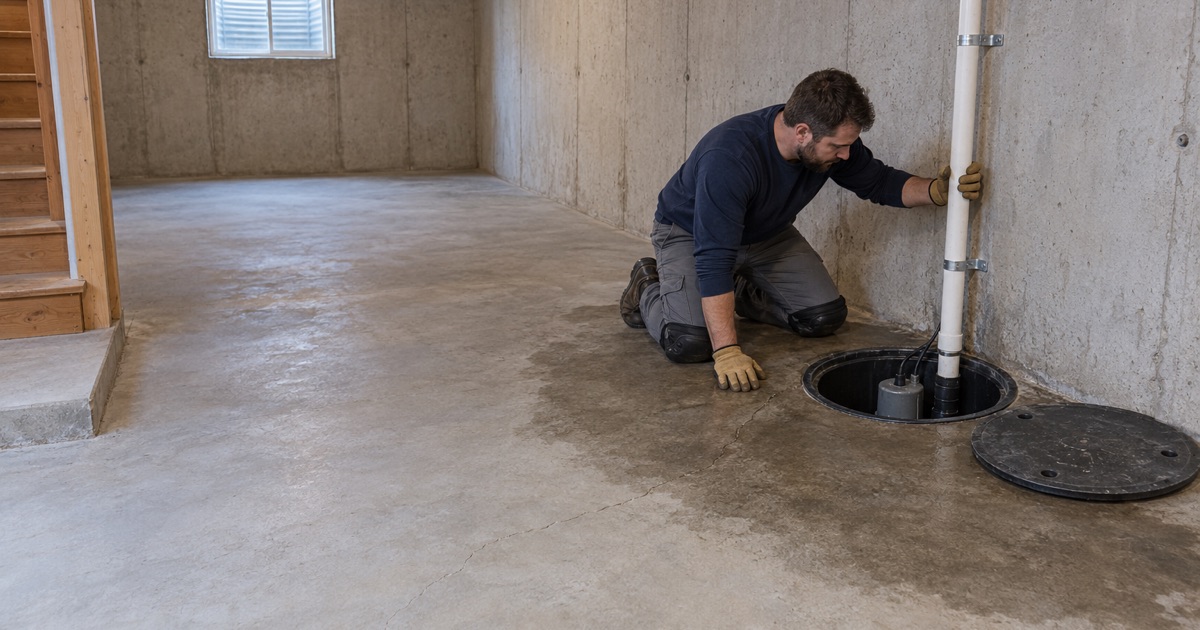
An opened sump basin in the corner of a Bartlett basement, its discharge pipe running up the poured wall and a damp band on the slab around the pit.

Basement Floor Epoxy: The Moisture Question First

A basement slab sits against the ground on every side, so the first question is how much moisture it is pushing up. We test the slab, read the walls and drains for signs of past water, and only then recommend a coating, a moisture-mitigation primer or no coating at all.

Basements After a Flood Like September 2008

In September 2008 floodwater entered the basements and first floors of Bartlett Estates homes around Beaver Pond at the Brewster Creek headwaters, and basements flooded again over Fourth of July weekend in 2026. After water like that, cleanup, drying and repairs come first, and a coating goes down only once the slab has dried and tests within the product’s limits.

Overhead Sewer Conversions Before the Floor

Bartlett’s Overhead Sewer Program pays up to $10,000 toward an overhead sewer for owner-occupied single-family homes that have had sanitary sewer backups. Converting the plumbing often means trenching through the basement slab, so that work belongs before a new floor, not after it.

Sump Pits, Floor Drains and Ejector Pumps

A coated basement floor has to meet every sump pit, floor drain and ejector pump basin cleanly. We grind and seal to the edges, keep the coating from bridging into the pit and leave covers and drains working, because a floor that traps water around a pump defeats the reason the pump is there.

Old Floor Paint, Patching and Tile Glue

Many basements carry decades of floor paint, patching compound and black tile adhesive. All of it is ground off so the new coating bonds to concrete, and where old nine-inch tile or its mastic could contain asbestos, it is tested before any grinder touches it.

Efflorescence: White Powder on the Basement Floor

Efflorescence is the white, chalky salt left behind when water moves through concrete and evaporates at the surface. It tells us moisture is traveling through the slab, so we treat it as a test result to act on rather than a stain to scrub off before coating.

When a Moisture-Mitigation Primer Earns Its Cost

When a basement slab tests too wet for a standard epoxy, a moisture-mitigation primer can go down first to hold back vapor drive within its rated limits. It costs more and has limits of its own, so we use it only when the readings fall inside them and say so in the proposal.

Laundry Rooms, Workshops and Home Gyms

A laundry room needs a floor that shrugs off detergent and standing water, a workshop needs one that takes dropped tools and solvents, and a home gym needs grip under rubber mats and sneakers. We adjust the broadcast and topcoat for each room instead of coating the whole basement one way.

Warranty Exclusions for Moisture and Hydrostatic Pressure

Coating warranties commonly exclude failures caused by moisture vapor transmission and hydrostatic pressure under a basement slab. We walk through those exclusions before the job is sold, so an owner understands that a floor lifted by water from below is a slab problem, not a product defect.

A Coating Is Not Radon Mitigation or Waterproofing

A floor coating does not stop seepage, a sewer backup or a sump that cannot keep up, and it does not reduce radon. In Illinois radon mitigation is work licensed through IEMA, so we never sell a coating as a radon fix and point owners to a licensed mitigator when a test calls for one.

Color, Flake and Finish

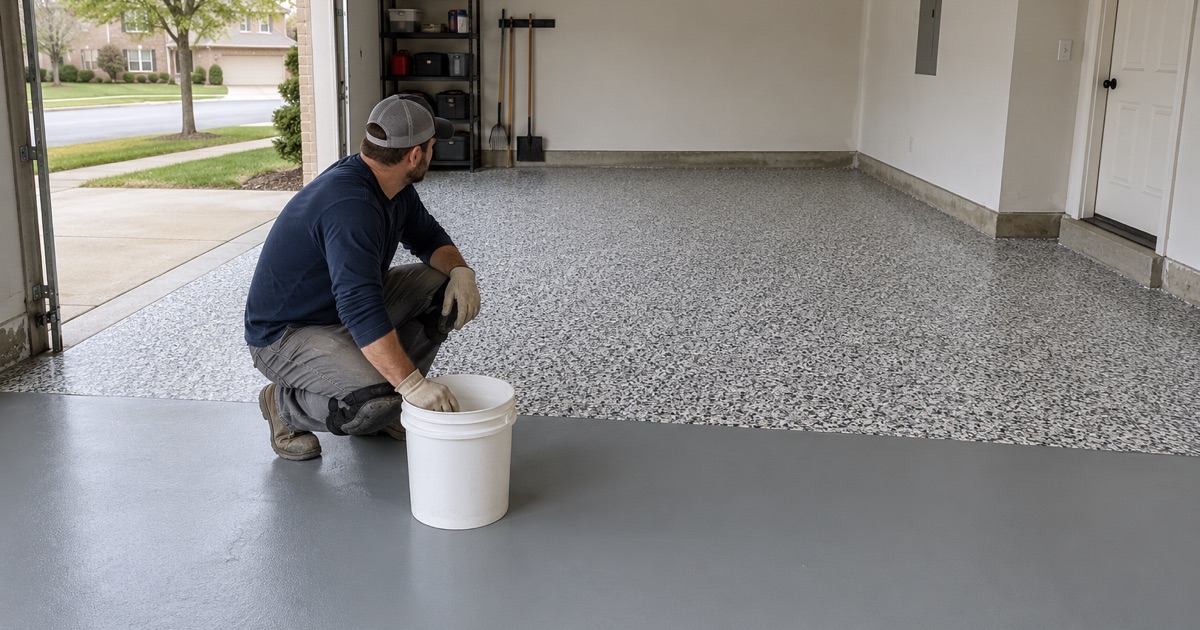
Gray, white and black flake settled to full coverage over the back half of a Bartlett garage floor, the tinted base coat still showing at the front.

Vinyl Flake Floors: Blend and Chip Size

A vinyl flake broadcast scatters colored chips into the wet base coat before a clear topcoat locks them in. A full broadcast of larger chips reads like terrazzo and hides dust well, while a lighter scatter of smaller chips lets more of the base color show through.

Metallic Epoxy Floors

Metallic epoxy carries pearlescent pigments that move while the resin is wet, leaving a marbled, three-dimensional finish. It needs a flat, well-prepared slab, a controlled room temperature and an installer who works the pattern quickly, because the look sets in minutes and cannot be patched invisibly later.

Polished Concrete and How Much Aggregate Shows

Polished concrete is the slab itself, ground in stages, hardened with a lithium silicate densifier and polished to the sheen you choose. A light cream polish keeps the surface paste intact, while a deeper grind exposes fine salt-and-pepper or larger stone, and we open a test area before committing to either.

Gloss, Satin or Matte Topcoats

High gloss looks sharp but shows dust, tire marks and fine scratches; satin and matte hide them better and read calmer in a garage or basement. The sheen comes from the topcoat, so it can be matched to how the floor will actually be used and cleaned.

Quartz Broadcast Systems

A quartz aggregate broadcast puts colored quartz sand into the resin, adding color and a slip-resistant texture in one step. It suits ramps, kitchens and wet entries, and the grit size and topcoat thickness decide how aggressive the finished surface feels underfoot.

Solid Color Epoxy Coatings

A solid color epoxy or polyaspartic floor is the simplest system and often the right one for a workshop, utility room or warehouse where marks are expected and easy cleaning matters most. A fine grit in the topcoat adds traction without the cost of a full broadcast.

Sunlight, Ultraviolet Exposure and Ambering

Many epoxies yellow, or amber, under ultraviolet light, which shows on floors near an open garage door or a sunny window. Where that exposure is likely, we topcoat with a UV-stable polyaspartic or aliphatic urethane so the color holds.

Saw-Cut Lines, Borders and Logos

Decorative saw cuts can turn a plain slab into a grid or tile pattern, and borders or a contrasting band can frame a showroom or garage. Logos and lettering are laid out and masked before the coating goes down, so they become part of the floor rather than a decal on top of it.

Shops, Warehouses, Stores and Kitchens

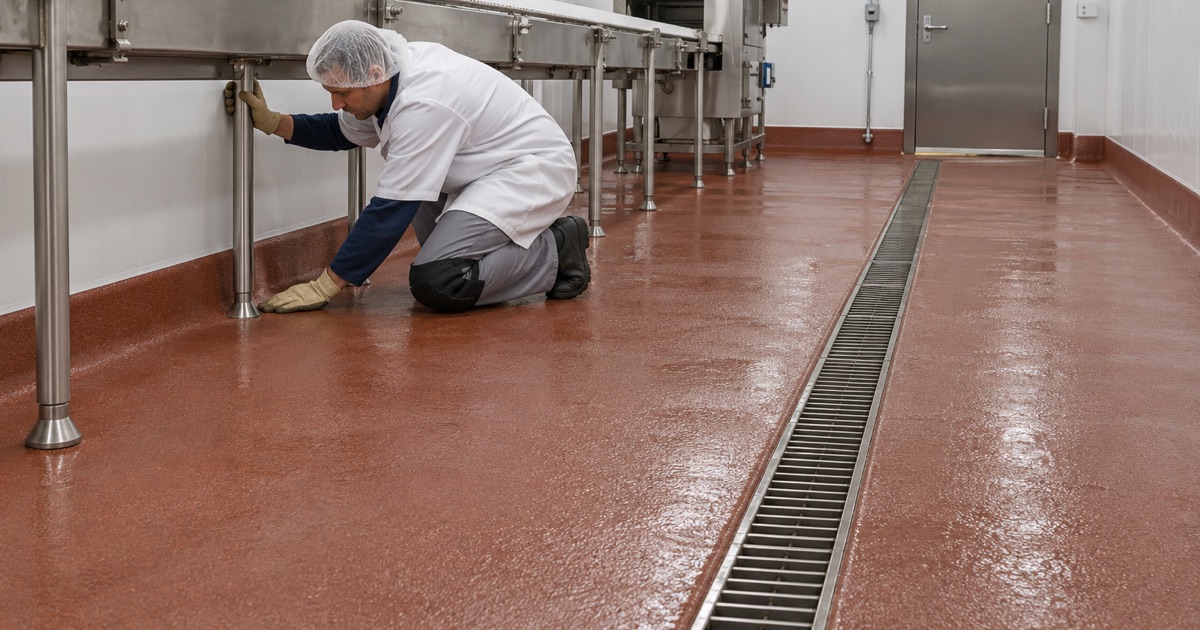
A sloped red urethane cement washdown floor under a stainless conveyor in a Bartlett food processing room, coved up the wall to a trench drain.

How a Commercial Floor Job Differs

A commercial epoxy floor is scheduled around the business, sized for use rather than looks, and usually involves more square footage, thicker systems and tighter cure windows. We plan the phasing, dust control and return-to-service time with the owner before the first grinder arrives.

Warehouse and Flex-Bay Floors in Brewster Creek

Industrial parks like Brewster Creek Business Park hold warehouse and flex bays where forklifts, pallet jacks and rack loads punish a slab. Those floors are shot blasted or ground, their joints repaired, and a thick 100% solids epoxy or urethane system specified for wheel traffic.

Food Processing and Produce Distribution Floors

Food processing and produce distribution floors are washed down every shift with hot water and cleaners. They need a seamless, sanitary system with coved edges and a texture that stays slip resistant when wet, which usually points to urethane cement rather than standard epoxy.

Auto Repair and Fleet Garage Floors

Repair shops and fleet garages see oil, brake fluid, antifreeze and dropped tools every day. We degrease and grind contaminated concrete until it is sound, then install a chemical-resistant system that cleans up without softening, with lift bays and walkways marked if you want them.

Restaurant and Bakery Kitchen Floors

Restaurant and bakery kitchens go through county plan review, and the FDA Food Code calls for coved floor and wall junctures where floors are cleaned with water (6-201.13). Bartlett spans DuPage, Cook and Kane counties, so the reviewing health department depends on the address, and we confirm it before the floor is specified.

Urethane Cement for Hot Water and Cleaners

Urethane cement is a cement-filled polyurethane system that tolerates hot water, steam cleaning and thermal shock that would soften or crack a standard epoxy. It is the usual choice for commercial kitchens and food plants, and it can be troweled thick with an integral cove base.

Retail and Shopping Center Tenant Floors

Retail tenants need a floor that looks right on opening day and keeps looking right under carts and steady foot traffic. Polished concrete, metallic epoxy or a clean solid color are common choices, and we work within landlord rules on hours and access.

Medical Office and Clinic Floors

Medical offices and clinics need floors that clean easily and stay seamless around exam rooms and restrooms. We phase those jobs room by room, often after hours, so patients keep moving and no hallway is closed while a coating cures.

Illinois VOC Limits on Floor Coatings

Illinois caps volatile organic compounds under 35 Ill. Adm. Code Part 223, at 250 grams per liter for floor coatings and 340 for industrial maintenance coatings, and the rule binds whoever applies the product as well as whoever sells it. Every product we install is chosen inside those limits.

Nights and Weekends Around an Open Business

When a shop, store or kitchen cannot close, the work moves to overnight and weekend windows. Fast-curing polyaspartic and urethane systems let a finished section return to service the next morning, and the floor is phased so part of the business keeps running throughout.

Areas We Serve

Bartlett Epoxy Flooring provides epoxy-flooring throughout the greater Bartlett area, with the same crews and the same standards on every job.

Good to know

Frequently Asked Questions

How much does an epoxy floor cost?

It depends on the size of the floor, the condition of the slab, the repairs it needs, whether an old coating has to come off and which system you choose. We give a written price after a walkthrough, with every one of those items listed so you can compare quotes line by line.

How long does a garage floor installation take?

Most residential garages are ground, repaired and coated over one to two days, followed by the cure time printed for the product before you drive on it. Cold slabs, moisture problems or heavy crack repair can add time, and we tell you that before the job is booked.

Do you test the slab for moisture before coating?

Yes. Every basement and garage slab gets a moisture test before the price is final, using a plastic sheet test, calcium chloride kits or in-situ relative humidity probes depending on the floor. The readings decide the system, and sometimes whether to coat at all.

Is epoxy or polyaspartic the better coating?

Each has a job. A 100% solids epoxy builds thickness and bonds well as a base coat, while a polyaspartic topcoat cures fast, resists ultraviolet light and stands up to salt and warm tires. Many of our garage floors use both in one system.

Do I need a permit to have my floor coated?

That depends on the village and the scope. In Bartlett we check with the Building Division before scheduling, because replacing a slab means new concrete and inspections, while a coating over an existing slab may be handled differently.

Will I get a written contract?

Yes. Home jobs above the Illinois threshold get a written contract and the state's Home Repair: Know Your Consumer Rights pamphlet before any grinding starts, and every proposal names the product line, the number of coats and the finished thickness.

Can you coat over my old paint or epoxy?

Usually not directly. Floor paint and failing coatings are ground off so the new system bonds to bare concrete. A sound, well-bonded epoxy can sometimes be abraded and recoated, which we decide after checking its adhesion on site.

Will a floor coating keep water or radon out of my basement?

No. A coating does not stop seepage, a sewer backup or radon. Water problems need drainage or plumbing work first, and radon reduction in Illinois is licensed mitigation work that a flooring crew cannot offer.

How slippery is a coated floor when it gets wet?

Slip resistance comes from what is broadcast into the coating and the topcoat over it, such as quartz, vinyl flake or a fine added grit. We specify the texture room by room, more aggressive for wet entries and kitchens and finer for living spaces.

Can a commercial floor be done without closing the business?

In most cases, yes. We phase the floor by area and work overnight and weekend windows with fast-curing systems, so part of the shop, store or kitchen keeps running while each section cures.

Ready to Get Started?

Request a free quote today and we'll get back to you fast.